
ノボジーン
  • ノボジーン
  • ゲノミクス
    • ヒト全ゲノムシーケンス
    • 動植物全ゲノムシーケンス
    • 微生物全ゲノムシーケンス
    • 動植物de novoシーケンス
    • 微生物de novoシーケンス
    • ショットガンメタゲノムシーケンス
    • アンプリコンシーケンス
    • 全エクソームシーケンス
    トランスクリプトミクス
    • mRNAシーケンス
    • トータルRNAシーケンス
    • 全長トランスクリプトームシーケンス
    • 全トランスクリプトームシーケンス
    • スモールRNAシーケンシング
    • 環状RNAシーケンス
    • メタトランスクリプトームシーケンス
    • 原核生物RNAシーケンス
    シングルセルと空間オミクス
    • シングルセル遺伝子発現解析
    • シングルセル免疫プロファイリングシーケンス
    • シングルセルロングリードトランスクリプトーム
    エピゲノミクス
    • 全ゲノムバイサルファイトシーケンス(WGBS)
    • ディレクトDNAメチレーションシーケンス(DM-Seq)new
    • 還元型バイサルファイトシーケンス (RRBS)
    • クロマチン免疫沈降シーケンス(ChIP-Seq)
    • RNA免疫沈降シーケンス (RIP-Seq)

    相乗りシーケンス

    • 相乗りシーケンス(イルミナプラットフォーム)
    • 相乗りシーケンス(PacBioプラットフォーム)
    プロテオミクス & メタボロミクス
    • Olinkプロテオミクス
  • プロモーションプロモーション
    • プラットフォーム
    • インテリジェント自動化プラットフォーム(Falcon)
    • バイオインフォマティクス解析ツール(NovoMagic)
    • カスタマサービスシステム(CSS)
    • パンフレット
    • ケーススタディ
    • ウェビナー
    • ブログ
    • サンプルガイドライン
    • コンミュニティ
    • がん研究
    • がん免疫
    • アグリゲノミクス
    • 環境
    • 食品科学
    • ヒトマイクロバイオーム
    • 植物および動物マイクロバイオーム
    • 創薬および開発
    • 希少および複雑性疾患
    • ノボジーンについて
    • 拠点一覧
    • ニュース
    • キャリア
  • お問い合わせお問い合わせ
  1. Home
  2. Resources
  3. ブログ
  4. Understanding the role of genetic resistance in the UK ash tree population

Understanding the role of genetic resistance in the UK ash tree population

This article was compiled from a recent webinar, delivered by Professor Richard Buggs and supported by Novogene, a genomic services and solutions provider. You can watch the webinar ‘Applying Personalized Genomics to Ash Trees’ on demand here.

Pests and pathogens are of particular concern when it comes to the growing biotic threats that trees face as a result of global trade. Therefore, it is more urgent than ever to research which factors allow a tree to be resistant to certain pests and pathogens. Recently, genomics has been utilised to provide some insight into how trees show this resistance.

One example is in studies undertaken on ash trees, which are now threatened in Europe by a fungus called Hymenoscyphus fraxineus, the cause of ash dieback – a deadly fungal disease that has killed millions of ash trees in the UK since its arrival in 2012. It was first found in Poland and then gradually spread across the whole of Europe, most likely as a result of accidental introductions due to human activity.
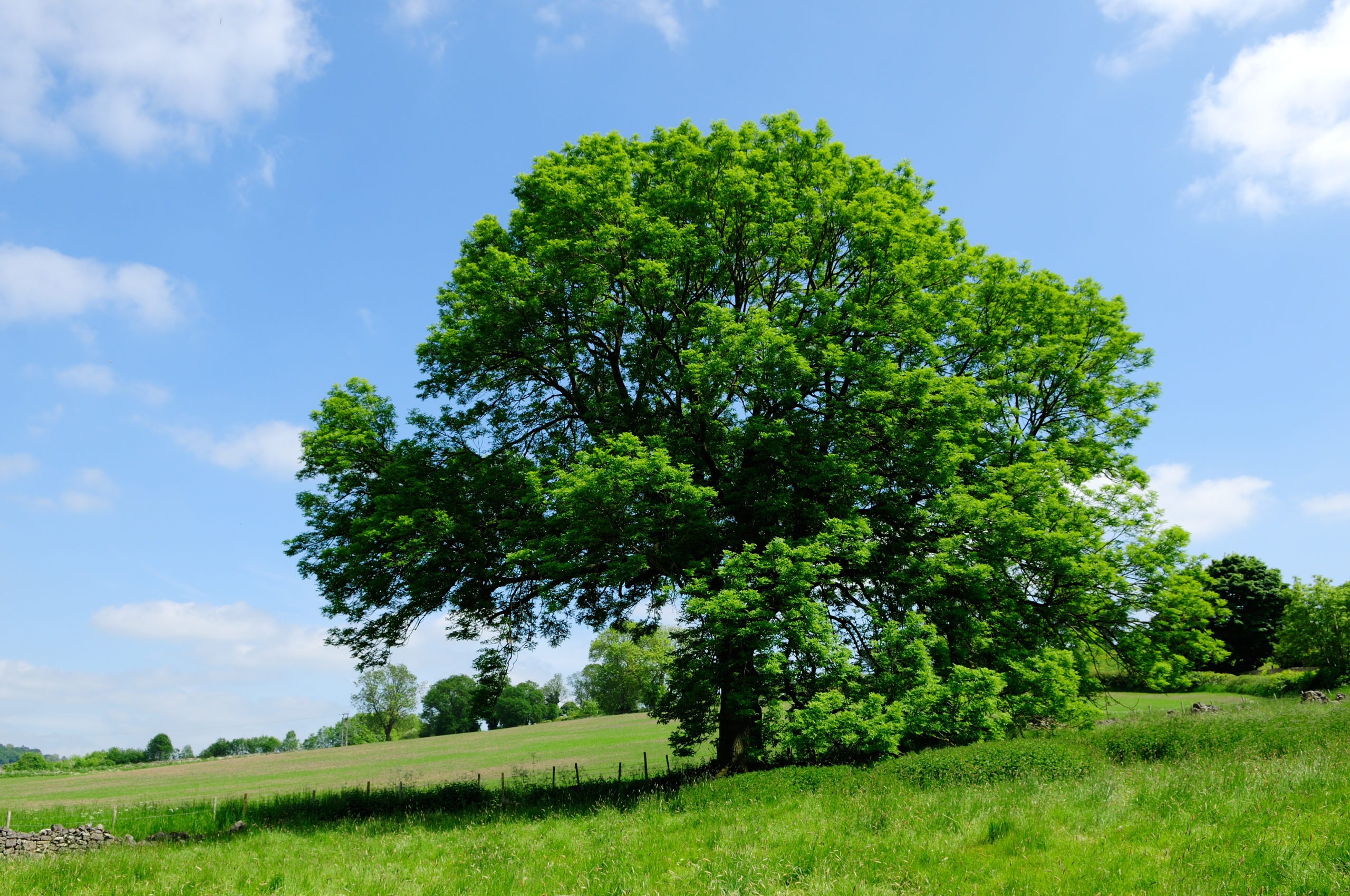
Using genetics to study ash trees

Trees are notoriously difficult to research in terms of genetics. Studying trees has been compared to working on human beings. As with humans, you cannot tell trees who to mate with. You cannot manipulate a tree’s environment easily. And trees also have a very long generation time. Compared to carrying out genetics work on plants that are regularly used for genetic research, such as Arabidopsis sp., which yields many seeds and generates enough information to produce a genetic map in a relatively short time frame, researching tree genomes can prove a challenge.

Despite having long generation and harvest times, and requiring huge spaces to grow, ash trees have a small genome size of 0.9 Giga base pairs, which is less than a third of the human genome size. This means that there is a real opportunity to perform genomic studies on ash trees, along with other broadleaf species, at a relatively cheap price. Using such species could deliver rapid advances in the understanding of genetics and the genetic basis of traits in these important trees, and ultimately encourage the utilisation and transfer of data to be applied to other relevant species around the world.

Professor Richard Buggs and his research on genetic resistance to ash dieback

Professor Richard Buggs is an eminent scientist working at the Royal Botanical Gardens in Kew. He is particularly interested in the role that genetic variance plays in the resistance to ash dieback.

Richard and his group first looked at mortality rates that could be expected for ash trees in Europe. They discovered that, in certain areas, up to 80% of ash trees could die. Because ash is such a common type of tree, this could devastate the landscape of Europe.

As an initial move into studying the genomic basis of ash tree resistance to ash dieback fungus, Richard and his group sequenced the genome of the ash tree for the first time and published the data. Using a pooling system, whereby 1,250 trees were divided into ‘healthy’ and ‘unhealthy’ equally sized groups and then divided further by their location, the DNA was sequenced, and the data was used to carry out genomic prediction studies on ash tree health, essentially the equivalent of a polygenic risk score in humans.

It was found that, in any one given tree, 65% of the predictions were correct with regard to how badly affected the tree would be from ash dieback. For genomic predictions, these were reasonably respectable numbers, which has positive implications for the use of the data to inform tree breeding programmes. Encouragingly, prediction accuracy increased to 80% in the healthiest fifth of the population, suggesting that a high level of certainty could be attained when applied to breeding programmes for trees with high genetic resistance to ash dieback.

This research was then applied to a woodland of varying aged ash trees in Surrey. The trees were mapped, their sizes were estimated, and their whole genomes were sampled for sequencing. This approach could be considered as a type of ‘personalised genomics’ for ash trees. Working with Novogene, the DNA was collected from 600 trees and sequenced individually, locating about 21 million single nucleotide polymorphisms (SNPs) in the population.

Yet, as a result of the widely varied micro-environments within the woodland, the genetic based resistance to ash dieback was less conclusive than that of the previous mass screening trials, where all the trees had been the same age and were grown under uniformed conditions.

The future of using genetic information to predict tree health

Richard explained: “What we’re finding overall is that doing personalised genomics for trees is complicated and difficult. We knew that was the case for humans, it’s also the case for trees.”

Nevertheless, there is still a large amount of research in progress and continued analysis of the data in order to explore new areas. For example, by examining the whole genome, differences between resistance to ash dieback in younger and older trees is being investigated. Therefore, more accurate predictions in terms of resistance to the fungus are anticipated. Furthermore, instead of simply classifying trees as ‘resistant’ or ‘susceptible’, it will be possible to create a novel and more bespoke genomic prediction method, which would consider the pooling system. This new way of predicting the resistance of trees to ash dieback is likely to prove much more useful, in terms of both ash tree conservation and investigations into the genetic basis for disease in all trees.

サービスサービス menu

サポートサポート menu

会社会社 menu

サービス
全ゲノムシーケンスde novoシーケンスアンプリコンシーケンスショットガンメタゲノムシーケンスディレクトDNAメチレーションシーケンス(DM-Seq)mRNAシーケンスシングルセル遺伝子発現解析Olinkプロテオミクス
サポート
バイオインフォマティクス解析ツール(NovoMagic)カスタマサービスシステム(CSS)インテリジェント自動化プラットフォーム(Falcon)
会社
ノボジーンについて拠点一覧プラットフォームニュースキャリアお問い合わせ
YouTubeYouTube hoverXX hover
Copyright © 2026 Novogene Inc. All rights reserved. 本サービスは研究目的のみにご利用ください。臨床診断目的には使用頂けません。
ノボジーン
  • ノボジーン
  • ゲノミクス
    • ヒト全ゲノムシーケンス
    • 動植物全ゲノムシーケンス
    • 微生物全ゲノムシーケンス
    • 動植物de novoシーケンス
    • 微生物de novoシーケンス
    • ショットガンメタゲノムシーケンス
    • アンプリコンシーケンス
    • 全エクソームシーケンス
    トランスクリプトミクス
    • mRNAシーケンス
    • トータルRNAシーケンス
    • 全長トランスクリプトームシーケンス
    • 全トランスクリプトームシーケンス
    • スモールRNAシーケンシング
    • 環状RNAシーケンス
    • メタトランスクリプトームシーケンス
    • 原核生物RNAシーケンス
    シングルセルと空間オミクス
    • シングルセル遺伝子発現解析
    • シングルセル免疫プロファイリングシーケンス
    • シングルセルロングリードトランスクリプトーム
    エピゲノミクス
    • 全ゲノムバイサルファイトシーケンス(WGBS)
    • ディレクトDNAメチレーションシーケンス(DM-Seq)new
    • 還元型バイサルファイトシーケンス (RRBS)
    • クロマチン免疫沈降シーケンス(ChIP-Seq)
    • RNA免疫沈降シーケンス (RIP-Seq)

    相乗りシーケンス

    • 相乗りシーケンス(イルミナプラットフォーム)
    • 相乗りシーケンス(PacBioプラットフォーム)
    プロテオミクス & メタボロミクス
    • Olinkプロテオミクス
  • プロモーションプロモーション
    • プラットフォーム
    • インテリジェント自動化プラットフォーム(Falcon)
    • バイオインフォマティクス解析ツール(NovoMagic)
    • カスタマサービスシステム(CSS)
    • パンフレット
    • ケーススタディ
    • ウェビナー
    • ブログ
    • サンプルガイドライン
    • コンミュニティ
    • がん研究
    • がん免疫
    • アグリゲノミクス
    • 環境
    • 食品科学
    • ヒトマイクロバイオーム
    • 植物および動物マイクロバイオーム
    • 創薬および開発
    • 希少および複雑性疾患
    • ノボジーンについて
    • 拠点一覧
    • ニュース
    • キャリア
  • お問い合わせお問い合わせ
  1. Home
  2. Resources
  3. ブログ
  4. Understanding the role of genetic resistance in the UK ash tree population

Understanding the role of genetic resistance in the UK ash tree population

This article was compiled from a recent webinar, delivered by Professor Richard Buggs and supported by Novogene, a genomic services and solutions provider. You can watch the webinar ‘Applying Personalized Genomics to Ash Trees’ on demand here.

Pests and pathogens are of particular concern when it comes to the growing biotic threats that trees face as a result of global trade. Therefore, it is more urgent than ever to research which factors allow a tree to be resistant to certain pests and pathogens. Recently, genomics has been utilised to provide some insight into how trees show this resistance.

One example is in studies undertaken on ash trees, which are now threatened in Europe by a fungus called Hymenoscyphus fraxineus, the cause of ash dieback – a deadly fungal disease that has killed millions of ash trees in the UK since its arrival in 2012. It was first found in Poland and then gradually spread across the whole of Europe, most likely as a result of accidental introductions due to human activity.

Using genetics to study ash trees

Trees are notoriously difficult to research in terms of genetics. Studying trees has been compared to working on human beings. As with humans, you cannot tell trees who to mate with. You cannot manipulate a tree’s environment easily. And trees also have a very long generation time. Compared to carrying out genetics work on plants that are regularly used for genetic research, such as Arabidopsis sp., which yields many seeds and generates enough information to produce a genetic map in a relatively short time frame, researching tree genomes can prove a challenge.

Despite having long generation and harvest times, and requiring huge spaces to grow, ash trees have a small genome size of 0.9 Giga base pairs, which is less than a third of the human genome size. This means that there is a real opportunity to perform genomic studies on ash trees, along with other broadleaf species, at a relatively cheap price. Using such species could deliver rapid advances in the understanding of genetics and the genetic basis of traits in these important trees, and ultimately encourage the utilisation and transfer of data to be applied to other relevant species around the world.

Professor Richard Buggs and his research on genetic resistance to ash dieback

Professor Richard Buggs is an eminent scientist working at the Royal Botanical Gardens in Kew. He is particularly interested in the role that genetic variance plays in the resistance to ash dieback.

Richard and his group first looked at mortality rates that could be expected for ash trees in Europe. They discovered that, in certain areas, up to 80% of ash trees could die. Because ash is such a common type of tree, this could devastate the landscape of Europe.

As an initial move into studying the genomic basis of ash tree resistance to ash dieback fungus, Richard and his group sequenced the genome of the ash tree for the first time and published the data. Using a pooling system, whereby 1,250 trees were divided into ‘healthy’ and ‘unhealthy’ equally sized groups and then divided further by their location, the DNA was sequenced, and the data was used to carry out genomic prediction studies on ash tree health, essentially the equivalent of a polygenic risk score in humans.

It was found that, in any one given tree, 65% of the predictions were correct with regard to how badly affected the tree would be from ash dieback. For genomic predictions, these were reasonably respectable numbers, which has positive implications for the use of the data to inform tree breeding programmes. Encouragingly, prediction accuracy increased to 80% in the healthiest fifth of the population, suggesting that a high level of certainty could be attained when applied to breeding programmes for trees with high genetic resistance to ash dieback.

This research was then applied to a woodland of varying aged ash trees in Surrey. The trees were mapped, their sizes were estimated, and their whole genomes were sampled for sequencing. This approach could be considered as a type of ‘personalised genomics’ for ash trees. Working with Novogene, the DNA was collected from 600 trees and sequenced individually, locating about 21 million single nucleotide polymorphisms (SNPs) in the population.

Yet, as a result of the widely varied micro-environments within the woodland, the genetic based resistance to ash dieback was less conclusive than that of the previous mass screening trials, where all the trees had been the same age and were grown under uniformed conditions.

The future of using genetic information to predict tree health

Richard explained: “What we’re finding overall is that doing personalised genomics for trees is complicated and difficult. We knew that was the case for humans, it’s also the case for trees.”

Nevertheless, there is still a large amount of research in progress and continued analysis of the data in order to explore new areas. For example, by examining the whole genome, differences between resistance to ash dieback in younger and older trees is being investigated. Therefore, more accurate predictions in terms of resistance to the fungus are anticipated. Furthermore, instead of simply classifying trees as ‘resistant’ or ‘susceptible’, it will be possible to create a novel and more bespoke genomic prediction method, which would consider the pooling system. This new way of predicting the resistance of trees to ash dieback is likely to prove much more useful, in terms of both ash tree conservation and investigations into the genetic basis for disease in all trees.

サービスサービス menu

サポートサポート menu

会社会社 menu

サービス
全ゲノムシーケンスde novoシーケンスアンプリコンシーケンスショットガンメタゲノムシーケンスディレクトDNAメチレーションシーケンス(DM-Seq)mRNAシーケンスシングルセル遺伝子発現解析Olinkプロテオミクス
サポート
バイオインフォマティクス解析ツール(NovoMagic)カスタマサービスシステム(CSS)インテリジェント自動化プラットフォーム(Falcon)
会社
ノボジーンについて拠点一覧プラットフォームニュースキャリアお問い合わせ
YouTubeYouTube hoverXX hover
Copyright © 2026 Novogene Inc. All rights reserved. 本サービスは研究目的のみにご利用ください。臨床診断目的には使用頂けません。
プライバシーポリシーCookieポリシーキャリア