
ノボジーン
  • ノボジーン
  • ゲノミクス
    • ヒト全ゲノムシーケンス
    • 動植物全ゲノムシーケンス
    • 微生物全ゲノムシーケンス
    • 動植物de novoシーケンス
    • 微生物de novoシーケンス
    • ショットガンメタゲノムシーケンス
    • アンプリコンシーケンス
    • 全エクソームシーケンス
    トランスクリプトミクス
    • mRNAシーケンス
    • トータルRNAシーケンス
    • 全長トランスクリプトームシーケンス
    • 全トランスクリプトームシーケンス
    • スモールRNAシーケンシング
    • 環状RNAシーケンス
    • メタトランスクリプトームシーケンス
    • 原核生物RNAシーケンス
    シングルセルと空間オミクス
    • シングルセル遺伝子発現解析
    • シングルセル免疫プロファイリングシーケンス
    • シングルセルロングリードトランスクリプトーム
    エピゲノミクス
    • 全ゲノムバイサルファイトシーケンス(WGBS)
    • ディレクトDNAメチレーションシーケンス(DM-Seq)new
    • 還元型バイサルファイトシーケンス (RRBS)
    • クロマチン免疫沈降シーケンス(ChIP-Seq)
    • RNA免疫沈降シーケンス (RIP-Seq)

    相乗りシーケンス

    • 相乗りシーケンス(イルミナプラットフォーム)
    • 相乗りシーケンス(PacBioプラットフォーム)
    プロテオミクス & メタボロミクス
    • Olinkプロテオミクス
  • プロモーションプロモーション
    • プラットフォーム
    • インテリジェント自動化プラットフォーム(Falcon)
    • バイオインフォマティクス解析ツール(NovoMagic)
    • カスタマサービスシステム(CSS)
    • パンフレット
    • ケーススタディ
    • ウェビナー
    • ブログ
    • サンプルガイドライン
    • コンミュニティ
    • がん研究
    • がん免疫
    • アグリゲノミクス
    • 環境
    • 食品科学
    • ヒトマイクロバイオーム
    • 植物および動物マイクロバイオーム
    • 創薬および開発
    • 希少および複雑性疾患
    • ノボジーンについて
    • 拠点一覧
    • ニュース
    • キャリア
  • お問い合わせお問い合わせ
  1. Home
  2. Resources
  3. ブログ
  4. Take you to understand the 'high-temperature killer' - Heatstroke

Take you to understand the 'high-temperature killer' - Heatstroke

Heatstroke Introduction:

Heatstroke is a potentially fatal illness brought on by environmental or metabolic causes. Clinically, heatstroke is characterized by high hyperthermia (typically >40.5°C), multiorgan failure, and dysfunction of the central nervous system (CNS). The heatstroke symptoms include migraine, lack of appetite, sickness, confusion, rapid heartbeat, abdominal, leg, and arm cramps, a strong feeling of thirst, and excessive sweating. Heatstroke can be classified as either classic or exertional, depending on what caused it. Both forms result from the inability to expel too much body heat, although they have different underlying causes. Exertional heatstroke is linked to physical activity and occurs when high metabolic heat generation overwhelms physiological heat-loss processes. Classic heatstroke is caused by exposure to ambient heat and weak heat-dissipation mechanisms [1].

The heatstroke pathophysiological mechanism is not thoroughly studied. Next-generation sequencing (NGS) has increasingly empowered clinical diagnoses and other medical treatment elements. The NGS technology can enable researchers to comprehend the heatstroke condition’s underlying mechanisms, pathways, and course of treatment more effectively [2].
Major issues caused and sequencing technologies:

Heatstroke alters the composition of the gut microbiome population, which causes toxicity in the gut microbiota. The effect of the gut microbiota on the efficient metabolism process during heatstroke in rats was examined in one study using 16S rRNA gene sequencing. The results showed that the treatment group had an excess of Bacteroidetes, which was mediated through Xuebijing metabolism [3]. The 16S rRNA gene sequencing and NGS technologies can further explore the results and lead to a better understanding of the physiological pathway and genetic control of the metabolism during heatstroke conditions.

Heatstroke imbalance the electrolytes in the body, increasing the risk of death followed by an immediate onset of multiorgan failure and impairment. In a study including 150 patients, the single nucleotide polymorphisms (SNPs) of the CASQ1 gene, a calcium sensor, and regulator of calcium in cardiac and skeletal muscle cells were discovered to be related to physiological parameters for heatstroke [4]. In another study, mRNA expression and sequences were analyzed for various gut and intestinal enzymes. The results revealed that I-arginine is connected to improved intestinal mucosal barrier functioning by boosting the expression of Tight Junctions in rat small intestines during heatstroke [5]. The detection of mRNAs and SNPs can further explore these pathways and give valuable information on electrolytes and the overall metabolic gene regulation in heatstroke cases.

Apart from metabolism, serious problems with the central nervous system (CNS), especially the neurovascular unit (NVU), can result from heatstroke. Using gene sequencing and a comparison of the transcriptomes of neuronal and astrocyte primary cultures following heat treatment in rats, it was possible to explore the role of the Blood-brain barriers (BBB) component of the NVU in heat stroke. The findings shed important light on the transcriptional alterations that occur in neurovascular unit cells under heat stress and suggest that a cell-type-specific approach may be a feasible therapeutic approach for heatstroke treatments [6]. Such analysis of transcriptomes plays a pivotal role in understanding the expression pattern and its effect on CNS in heatstroke.

Like CNS, the respiratory system impairment is no exception in heatstroke. The lung is usually affected first while suffering heat stroke because it is a vital organ for gas exchange and heat dissipation. A research work studying differential expression genes (DEGs) in heatstroke cases identified 471 genes as DEGs. This study revealed important genes, signalling pathways, and infiltrating cell types in the lung following heat stress [7]. The results gave further direction to studying the transcriptional response of the body to heat stress leading to novel ideas for further exploring gene sequences and their responses to heatstroke in lung physiology for effective treatment.

Heat stress impairs the immune system’s ability to operate normally, which causes an unbalanced inflammatory response and coagulation cascade. A study analyzed the exosomes of patients with heat stroke for the presence of messenger RNAs (mRNAs), and microRNAs (miRNAs) linked to the immune functioning in heat stroke conditions. The results revealed that serum exosomes of heatstroke patients included numerous specific mRNAs linked to inflammatory response, blood coagulation, and platelet activation [8], [9]. Since these exosomes might represent a unique method for intercellular communication during heatstroke, the NGS sequencing technologies can aid in the further investigation of these exosomes and their genetic cargo.

Prevention:

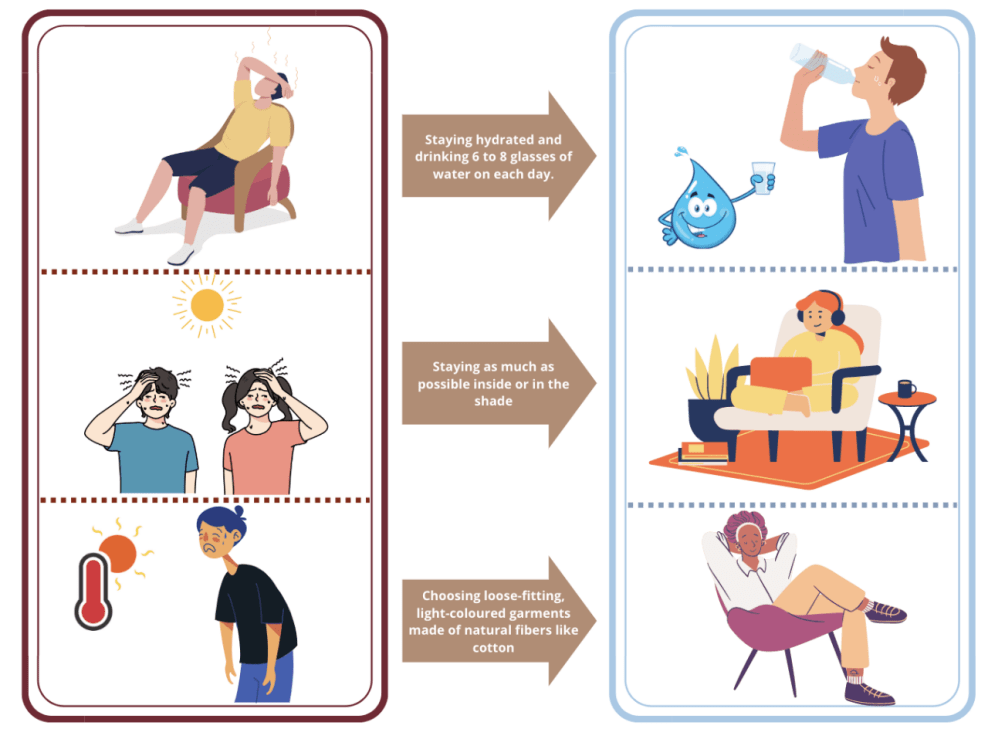
Although next-generation sequencing gives valuable insights into the underlying mechanism for better heatstroke management, it is always easier to prevent something from happening in the first place than to undo the harm after it has already occurred. Heatstroke prevention can be achieved by staying hydrated and drinking 6 to 8 glasses of water on average each day. Summertime is when the disorder is most prevalent. In hot summer conditions, limiting activities and avoiding exercise effectively prevent heatstroke. If activities must be engaged in, they should be planned for the cooler part of the day, and frequent breaks should be taken. Staying as much as possible inside or in the shade and taking frequent cool baths should be considered. Using sunscreen with a sun protection factor (SPF) of 30 or higher will protect you from sunburn and potential heat stress. Loose-fitting, light-coloured garments made of natural fibers like cotton and linen should be the choice of wear in hot environments.
References

[1] A. Bouchama and J. P. Knochel, “Heat stroke,” N. Engl. J. Med., vol. 346, no. 25, pp. 1978–1988, 2002.

[2] Y. Fujiwara, S. Matsunaga, and T. Sakamoto, “Next generation sequence-based technologies for analyzing DNA strand breaks,” Cytologia (Tokyo)., 2021, doi: 10.1508/CYTOLOGIA.86.3.

[3] W. Qiang et al., “Impact of the gut microbiota on heat stroke rat mediated by Xuebijing metabolism,” Microb. Pathog., vol. 155, no. April, p. 104861, 2021, doi: 10.1016/j.micpath.2021.104861.

[4] Y. Li, Y. Wang, and L. Ma, “An Association Study of CASQ1 Gene Polymorphisms and Heat Stroke,” Genomics, Proteomics Bioinforma., vol. 12, no. 3, pp. 127–132, 2014, doi: 10.1016/j.gpb.2014.03.004.

[5] Z. Xia et al., “l-Arginine alleviates heat stress-induced intestinal epithelial barrier damage by promoting expression of tight junction proteins via the AMPK pathway,” Mol. Biol. Rep., 2019, doi: 10.1007/s11033-019-05090-1.

[6] B. Niu, T. Zhang, H. Hu, and B. Cao, “Transcriptome Sequencing Reveals Astrocytes as a Therapeutic Target in Heat-Stroke,” Neurosci. Bull., vol. 33, no. 6, pp. 627–640, 2017, doi: 10.1007/s12264-017-0156-8.

[7] Z. Liu et al., “Expression profiles of genes associated with inflammatory responses and oxidative stress in lung after heat stroke,” Biosci. Rep., 2020, doi: 10.1042/BSR20192048.

[8] H. S. Chen, H. S. Tong, Y. Zhao, C. Y. Hong, J. P. Bin, and L. Su, “Differential expression pattern of exosome long non-coding RNAs (lncRNAs) and microRNAs (miRNAs) in vascular endothelial cells under heat stroke,” Med. Sci. Monit., 2018, doi: 10.12659/MSM.909983.

[9] Y. Li et al., “Exosomes Derived From Heat Stroke Cases Carry miRNAs Associated With Inflammation and Coagulation Cascade,” Front. Immunol., 2021, doi: 10.3389/fimmu.2021.624753.

サービスサービス menu

サポートサポート menu

会社会社 menu

サービス
全ゲノムシーケンスde novoシーケンスアンプリコンシーケンスショットガンメタゲノムシーケンスディレクトDNAメチレーションシーケンス(DM-Seq)mRNAシーケンスシングルセル遺伝子発現解析Olinkプロテオミクス
サポート
バイオインフォマティクス解析ツール(NovoMagic)カスタマサービスシステム(CSS)インテリジェント自動化プラットフォーム(Falcon)
会社
ノボジーンについて拠点一覧プラットフォームニュースキャリアお問い合わせ
YouTubeYouTube hoverXX hover
Copyright © 2026 Novogene Inc. All rights reserved. 本サービスは研究目的のみにご利用ください。臨床診断目的には使用頂けません。
ノボジーン
  • ノボジーン
  • ゲノミクス
    • ヒト全ゲノムシーケンス
    • 動植物全ゲノムシーケンス
    • 微生物全ゲノムシーケンス
    • 動植物de novoシーケンス
    • 微生物de novoシーケンス
    • ショットガンメタゲノムシーケンス
    • アンプリコンシーケンス
    • 全エクソームシーケンス
    トランスクリプトミクス
    • mRNAシーケンス
    • トータルRNAシーケンス
    • 全長トランスクリプトームシーケンス
    • 全トランスクリプトームシーケンス
    • スモールRNAシーケンシング
    • 環状RNAシーケンス
    • メタトランスクリプトームシーケンス
    • 原核生物RNAシーケンス
    シングルセルと空間オミクス
    • シングルセル遺伝子発現解析
    • シングルセル免疫プロファイリングシーケンス
    • シングルセルロングリードトランスクリプトーム
    エピゲノミクス
    • 全ゲノムバイサルファイトシーケンス(WGBS)
    • ディレクトDNAメチレーションシーケンス(DM-Seq)new
    • 還元型バイサルファイトシーケンス (RRBS)
    • クロマチン免疫沈降シーケンス(ChIP-Seq)
    • RNA免疫沈降シーケンス (RIP-Seq)

    相乗りシーケンス

    • 相乗りシーケンス(イルミナプラットフォーム)
    • 相乗りシーケンス(PacBioプラットフォーム)
    プロテオミクス & メタボロミクス
    • Olinkプロテオミクス
  • プロモーションプロモーション
    • プラットフォーム
    • インテリジェント自動化プラットフォーム(Falcon)
    • バイオインフォマティクス解析ツール(NovoMagic)
    • カスタマサービスシステム(CSS)
    • パンフレット
    • ケーススタディ
    • ウェビナー
    • ブログ
    • サンプルガイドライン
    • コンミュニティ
    • がん研究
    • がん免疫
    • アグリゲノミクス
    • 環境
    • 食品科学
    • ヒトマイクロバイオーム
    • 植物および動物マイクロバイオーム
    • 創薬および開発
    • 希少および複雑性疾患
    • ノボジーンについて
    • 拠点一覧
    • ニュース
    • キャリア
  • お問い合わせお問い合わせ
  1. Home
  2. Resources
  3. ブログ
  4. Take you to understand the 'high-temperature killer' - Heatstroke

Take you to understand the 'high-temperature killer' - Heatstroke

Heatstroke Introduction:

Heatstroke is a potentially fatal illness brought on by environmental or metabolic causes. Clinically, heatstroke is characterized by high hyperthermia (typically >40.5°C), multiorgan failure, and dysfunction of the central nervous system (CNS). The heatstroke symptoms include migraine, lack of appetite, sickness, confusion, rapid heartbeat, abdominal, leg, and arm cramps, a strong feeling of thirst, and excessive sweating. Heatstroke can be classified as either classic or exertional, depending on what caused it. Both forms result from the inability to expel too much body heat, although they have different underlying causes. Exertional heatstroke is linked to physical activity and occurs when high metabolic heat generation overwhelms physiological heat-loss processes. Classic heatstroke is caused by exposure to ambient heat and weak heat-dissipation mechanisms [1].

The heatstroke pathophysiological mechanism is not thoroughly studied. Next-generation sequencing (NGS) has increasingly empowered clinical diagnoses and other medical treatment elements. The NGS technology can enable researchers to comprehend the heatstroke condition’s underlying mechanisms, pathways, and course of treatment more effectively [2].

Major issues caused and sequencing technologies:

Heatstroke alters the composition of the gut microbiome population, which causes toxicity in the gut microbiota. The effect of the gut microbiota on the efficient metabolism process during heatstroke in rats was examined in one study using 16S rRNA gene sequencing. The results showed that the treatment group had an excess of Bacteroidetes, which was mediated through Xuebijing metabolism [3]. The 16S rRNA gene sequencing and NGS technologies can further explore the results and lead to a better understanding of the physiological pathway and genetic control of the metabolism during heatstroke conditions.

Heatstroke imbalance the electrolytes in the body, increasing the risk of death followed by an immediate onset of multiorgan failure and impairment. In a study including 150 patients, the single nucleotide polymorphisms (SNPs) of the CASQ1 gene, a calcium sensor, and regulator of calcium in cardiac and skeletal muscle cells were discovered to be related to physiological parameters for heatstroke [4]. In another study, mRNA expression and sequences were analyzed for various gut and intestinal enzymes. The results revealed that I-arginine is connected to improved intestinal mucosal barrier functioning by boosting the expression of Tight Junctions in rat small intestines during heatstroke [5]. The detection of mRNAs and SNPs can further explore these pathways and give valuable information on electrolytes and the overall metabolic gene regulation in heatstroke cases.

Apart from metabolism, serious problems with the central nervous system (CNS), especially the neurovascular unit (NVU), can result from heatstroke. Using gene sequencing and a comparison of the transcriptomes of neuronal and astrocyte primary cultures following heat treatment in rats, it was possible to explore the role of the Blood-brain barriers (BBB) component of the NVU in heat stroke. The findings shed important light on the transcriptional alterations that occur in neurovascular unit cells under heat stress and suggest that a cell-type-specific approach may be a feasible therapeutic approach for heatstroke treatments [6]. Such analysis of transcriptomes plays a pivotal role in understanding the expression pattern and its effect on CNS in heatstroke.

Like CNS, the respiratory system impairment is no exception in heatstroke. The lung is usually affected first while suffering heat stroke because it is a vital organ for gas exchange and heat dissipation. A research work studying differential expression genes (DEGs) in heatstroke cases identified 471 genes as DEGs. This study revealed important genes, signalling pathways, and infiltrating cell types in the lung following heat stress [7]. The results gave further direction to studying the transcriptional response of the body to heat stress leading to novel ideas for further exploring gene sequences and their responses to heatstroke in lung physiology for effective treatment.

Heat stress impairs the immune system’s ability to operate normally, which causes an unbalanced inflammatory response and coagulation cascade. A study analyzed the exosomes of patients with heat stroke for the presence of messenger RNAs (mRNAs), and microRNAs (miRNAs) linked to the immune functioning in heat stroke conditions. The results revealed that serum exosomes of heatstroke patients included numerous specific mRNAs linked to inflammatory response, blood coagulation, and platelet activation [8], [9]. Since these exosomes might represent a unique method for intercellular communication during heatstroke, the NGS sequencing technologies can aid in the further investigation of these exosomes and their genetic cargo.

Prevention:

Although next-generation sequencing gives valuable insights into the underlying mechanism for better heatstroke management, it is always easier to prevent something from happening in the first place than to undo the harm after it has already occurred. Heatstroke prevention can be achieved by staying hydrated and drinking 6 to 8 glasses of water on average each day. Summertime is when the disorder is most prevalent. In hot summer conditions, limiting activities and avoiding exercise effectively prevent heatstroke. If activities must be engaged in, they should be planned for the cooler part of the day, and frequent breaks should be taken. Staying as much as possible inside or in the shade and taking frequent cool baths should be considered. Using sunscreen with a sun protection factor (SPF) of 30 or higher will protect you from sunburn and potential heat stress. Loose-fitting, light-coloured garments made of natural fibers like cotton and linen should be the choice of wear in hot environments.

References

[1] A. Bouchama and J. P. Knochel, “Heat stroke,” N. Engl. J. Med., vol. 346, no. 25, pp. 1978–1988, 2002.

[2] Y. Fujiwara, S. Matsunaga, and T. Sakamoto, “Next generation sequence-based technologies for analyzing DNA strand breaks,” Cytologia (Tokyo)., 2021, doi: 10.1508/CYTOLOGIA.86.3.

[3] W. Qiang et al., “Impact of the gut microbiota on heat stroke rat mediated by Xuebijing metabolism,” Microb. Pathog., vol. 155, no. April, p. 104861, 2021, doi: 10.1016/j.micpath.2021.104861.

[4] Y. Li, Y. Wang, and L. Ma, “An Association Study of CASQ1 Gene Polymorphisms and Heat Stroke,” Genomics, Proteomics Bioinforma., vol. 12, no. 3, pp. 127–132, 2014, doi: 10.1016/j.gpb.2014.03.004.

[5] Z. Xia et al., “l-Arginine alleviates heat stress-induced intestinal epithelial barrier damage by promoting expression of tight junction proteins via the AMPK pathway,” Mol. Biol. Rep., 2019, doi: 10.1007/s11033-019-05090-1.

[6] B. Niu, T. Zhang, H. Hu, and B. Cao, “Transcriptome Sequencing Reveals Astrocytes as a Therapeutic Target in Heat-Stroke,” Neurosci. Bull., vol. 33, no. 6, pp. 627–640, 2017, doi: 10.1007/s12264-017-0156-8.

[7] Z. Liu et al., “Expression profiles of genes associated with inflammatory responses and oxidative stress in lung after heat stroke,” Biosci. Rep., 2020, doi: 10.1042/BSR20192048.

[8] H. S. Chen, H. S. Tong, Y. Zhao, C. Y. Hong, J. P. Bin, and L. Su, “Differential expression pattern of exosome long non-coding RNAs (lncRNAs) and microRNAs (miRNAs) in vascular endothelial cells under heat stroke,” Med. Sci. Monit., 2018, doi: 10.12659/MSM.909983.

[9] Y. Li et al., “Exosomes Derived From Heat Stroke Cases Carry miRNAs Associated With Inflammation and Coagulation Cascade,” Front. Immunol., 2021, doi: 10.3389/fimmu.2021.624753.

サービスサービス menu

サポートサポート menu

会社会社 menu

サービス
全ゲノムシーケンスde novoシーケンスアンプリコンシーケンスショットガンメタゲノムシーケンスディレクトDNAメチレーションシーケンス(DM-Seq)mRNAシーケンスシングルセル遺伝子発現解析Olinkプロテオミクス
サポート
バイオインフォマティクス解析ツール(NovoMagic)カスタマサービスシステム(CSS)インテリジェント自動化プラットフォーム(Falcon)
会社
ノボジーンについて拠点一覧プラットフォームニュースキャリアお問い合わせ
YouTubeYouTube hoverXX hover
Copyright © 2026 Novogene Inc. All rights reserved. 本サービスは研究目的のみにご利用ください。臨床診断目的には使用頂けません。
プライバシーポリシーCookieポリシーキャリア